


When embarking on a specific metal stamping project, one of the most critical decisions you'll make is choosing the right metal stamping die. As a trusted Metal Stamping Dies supplier, I understand the intricacies involved in this process and am here to guide you through the key considerations.
Understanding the Basics of Metal Stamping Dies
Before delving into the selection process, it's essential to have a basic understanding of what metal stamping dies are. Metal stamping dies are tools used to cut, shape, or form metal sheets into specific parts. They come in various types, each designed for a particular function. The most common types include blanking dies, piercing dies, bending dies, and progressive dies.
Blanking dies are used to cut a flat piece of metal from a larger sheet. Piercing dies, on the other hand, create holes in the metal. Bending dies are designed to bend the metal into a specific angle or shape, while progressive dies can perform multiple operations in a single pass, increasing efficiency and productivity.
Factors to Consider When Choosing a Metal Stamping Die
1. Material of the Metal
The type of metal you're working with is a crucial factor in die selection. Different metals have different properties, such as hardness, ductility, and thickness, which can affect the performance of the die. For example, harder metals like stainless steel require a more robust die with a high wear resistance. Softer metals, such as aluminum, may be more forgiving, but the die still needs to be designed to prevent deformation.
2. Complexity of the Part
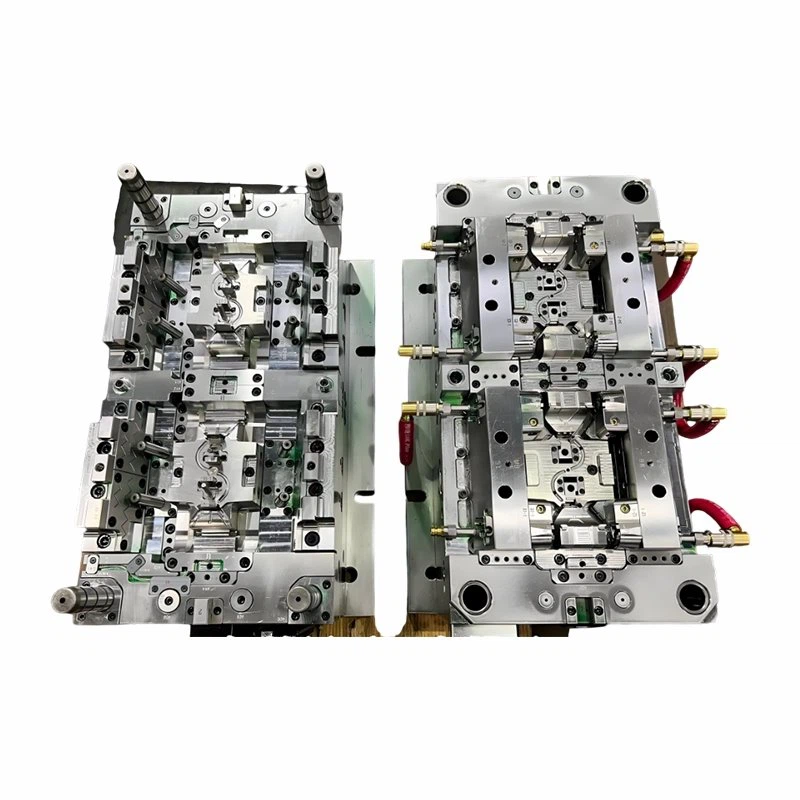
The complexity of the part you're producing also plays a significant role in die selection. Simple parts with basic shapes may only require a single-operation die, such as a blanking or piercing die. However, more complex parts with multiple bends, holes, and contours may need a progressive die. Progressive dies can perform multiple operations in a sequential manner, reducing the need for multiple setups and increasing production speed.

3. Production Volume
The expected production volume is another important consideration. For low-volume production runs, a simple and less expensive die may be sufficient. These dies can be quickly fabricated and are cost-effective for small quantities. However, for high-volume production, a more durable and efficient die, such as a progressive die, is recommended. Progressive dies can handle large volumes of production with minimal downtime, resulting in lower per-part costs in the long run.
4. Tolerance Requirements
Tolerance refers to the allowable deviation from the specified dimensions of the part. Tight tolerance requirements demand a high-precision die. The die must be fabricated with extreme accuracy to ensure that each part meets the required specifications. In some cases, additional processes such as grinding or polishing may be necessary to achieve the desired tolerance.
5. Cost
Cost is always a factor in any project. When choosing a metal stamping die, you need to balance the initial cost of the die with the long-term production costs. A more expensive die may have a higher upfront cost but can result in lower per-part costs for high-volume production. On the other hand, a cheaper die may be suitable for low-volume production but may not be cost-effective in the long run.
Types of Metal Stamping Dies and Their Applications
Blanking Dies
Blanking dies are used to cut a flat piece of metal from a larger sheet. They are commonly used in the production of parts such as washers, gaskets, and nameplates. Blanking dies can be simple or complex, depending on the shape and size of the part.
Piercing Dies
Piercing dies are designed to create holes in the metal. They are used in a wide range of applications, including the production of automotive parts, electronic components, and household appliances. Piercing dies can be single-hole or multi-hole, depending on the requirements of the part.
Bending Dies
Bending dies are used to bend the metal into a specific angle or shape. They are commonly used in the production of brackets, frames, and enclosures. Bending dies can be designed to produce simple bends or complex shapes, depending on the complexity of the part.
Progressive Dies
Progressive dies are the most versatile and efficient type of metal stamping die. They can perform multiple operations in a single pass, such as blanking, piercing, bending, and forming. Progressive dies are commonly used in high-volume production applications, such as the automotive and electronics industries.
Our Expertise as a Metal Stamping Dies Supplier
As a leading Metal Stamping Dies supplier, we have extensive experience in designing and manufacturing high-quality dies for a wide range of applications. Our team of experts uses the latest technology and equipment to ensure that each die meets the highest standards of quality and performance.
We offer a comprehensive range of metal stamping dies, including blanking dies, piercing dies, bending dies, and progressive dies. Our dies are made from high-quality materials and are designed to withstand the rigors of high-volume production. We also provide custom die design services to meet the specific requirements of our customers.
In addition to our die manufacturing services, we also offer a range of related services, such as die repair, maintenance, and testing. Our goal is to provide our customers with a complete solution for their metal stamping needs.
Related Products and Services
If you're interested in other related products and services, we also offer Injection Molding Metal Parts and Automotive Parts Fixtures. These products and services can complement your metal stamping projects and help you achieve better results.
Conclusion
Choosing the right metal stamping die for a specific project is a critical decision that can have a significant impact on the success of your project. By considering factors such as the material of the metal, the complexity of the part, the production volume, the tolerance requirements, and the cost, you can make an informed decision and select the die that best meets your needs.
As a trusted Metal Stamping Dies supplier, we are here to help you every step of the way. Whether you need a standard die or a custom-designed die, we have the expertise and experience to provide you with a high-quality solution. If you have any questions or would like to discuss your project in more detail, please don't hesitate to contact us. We look forward to working with you and helping you achieve your goals.
Contact Us for Procurement
If you're interested in our Metal Stamping Dies or related products and services, we invite you to contact us for procurement discussions. Our team of experts is ready to assist you in finding the right solutions for your specific project. You can explore our full range of Metal Stamping Dies on our website and reach out to us for more information.
References
- "Metal Stamping Handbook" by George E. Dieter
- "Tool and Manufacturing Engineers Handbook" by Society of Manufacturing Engineers


