


What is the function of the holes on a chassis shell?
As a seasoned supplier of chassis shells, I've often been asked about the purpose of the numerous holes found on these essential components. In this blog, I'll delve into the various functions of these holes, shedding light on their importance in the overall performance and functionality of chassis shells.
1. Ventilation and Cooling
One of the primary functions of the holes on a chassis shell is to facilitate ventilation and cooling. Electronic devices, especially those with high - power components such as servers, gaming PCs, and industrial control systems, generate a significant amount of heat during operation. If this heat is not dissipated properly, it can lead to overheating, which in turn can cause components to malfunction, reduce their lifespan, or even result in a complete system failure.
The holes on the chassis shell act as pathways for air to flow in and out of the enclosure. Cool air is drawn in through some holes, while hot air is expelled through others. This natural convection process helps to maintain a stable temperature inside the chassis, ensuring that the electronic components operate within their optimal temperature range. For example, in a server rack, the chassis shells of individual servers are designed with carefully placed holes to allow for efficient airflow, preventing the build - up of heat that could otherwise disrupt the server's operation.
2. Cable Management
Another crucial function of the holes on a chassis shell is cable management. In modern electronic systems, there are often numerous cables connecting different components, such as power cables, data cables, and signal cables. These cables need to be routed in an organized manner to prevent tangling, which can make maintenance difficult and also potentially cause interference between cables.
The holes on the chassis shell provide entry and exit points for these cables. They are typically designed in a way that allows cables to be neatly routed through the enclosure, keeping the interior organized and reducing the risk of cable damage. For instance, in a desktop computer chassis, there are holes at the back for power cables, USB cables, and HDMI cables to pass through, ensuring a clean and tidy appearance.
3. EMI/RFI Shielding and Grounding
Electromagnetic interference (EMI) and radio - frequency interference (RFI) can pose significant problems for electronic devices. These interferences can disrupt the normal operation of components, cause data errors, and even affect the performance of nearby electronic equipment. The holes on the chassis shell play a role in both shielding against EMI/RFI and providing grounding paths.
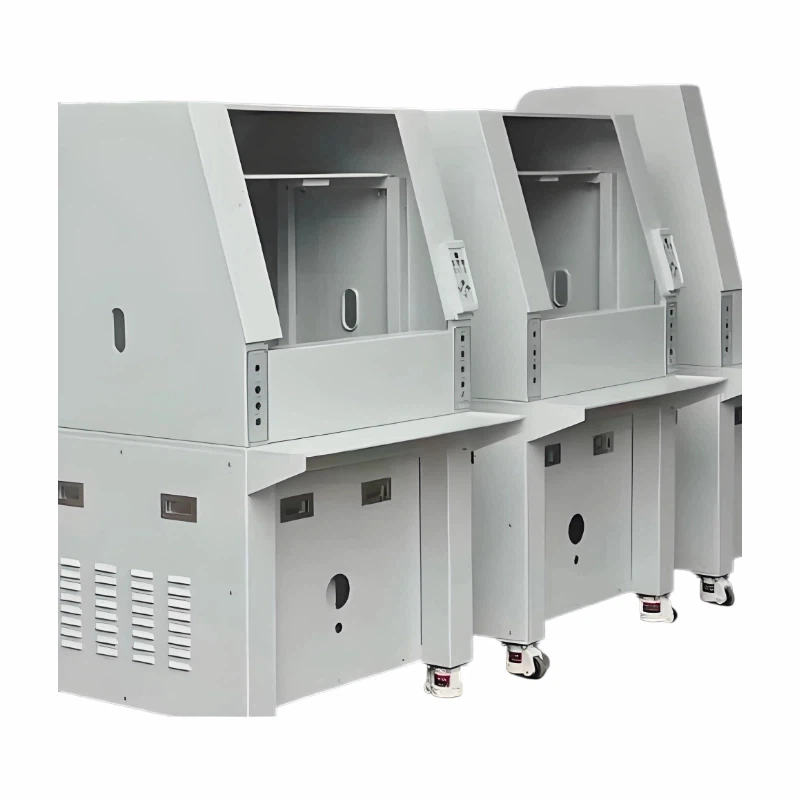

The chassis shell itself is often made of a conductive material, such as metal, which can act as a shield against electromagnetic and radio - frequency waves. The holes are designed in a way that minimizes the leakage of these waves while still allowing for ventilation and cable management. Additionally, some holes are used to connect the chassis to the ground, which helps to divert any unwanted electrical charges and further reduce the effects of EMI/RFI.
4. Mounting and Assembly
The holes on a chassis shell are also essential for mounting and assembly purposes. They provide attachment points for various components, such as circuit boards, hard drives, fans, and power supplies. By using screws, bolts, or other fasteners, these components can be securely fixed inside the chassis, ensuring proper alignment and stability.
For example, the holes on the side panels of a chassis can be used to mount expansion cards, such as graphics cards or network cards. The holes on the bottom of the chassis may be used to attach the power supply unit. This standardized approach to mounting allows for easy assembly and disassembly of the chassis, making it convenient for manufacturers during the production process and for users during maintenance or upgrades.
5. Customization and Accessibility
In some cases, the holes on a chassis shell are designed to provide customization options and accessibility. For example, some chassis shells have additional holes that can be used to install aftermarket accessories, such as additional fans, LED lighting, or liquid - cooling components. These holes give users the flexibility to modify their systems according to their specific needs and preferences.
Moreover, the holes can also provide access to internal components for maintenance and troubleshooting. By removing a panel or using a tool to reach through a hole, technicians can easily access and replace faulty components without having to disassemble the entire chassis.
Related Products and Their Importance
As a chassis shell supplier, we also offer a range of related products that complement the functionality of the chassis shells. For instance, Cover Plate Dispensing is an important process that ensures proper sealing and protection of the chassis shell. The cover plates help to prevent dust, moisture, and other contaminants from entering the enclosure, which can damage the internal components.
Classic Spray Paint not only enhances the aesthetic appeal of the chassis shell but also provides an additional layer of protection. The paint can prevent corrosion and rust, especially in environments where the chassis is exposed to moisture or chemicals.
Chassis Crossbeams are another important component. They provide structural support to the chassis shell, ensuring its stability and durability. The crossbeams help to distribute the weight evenly across the chassis, reducing the risk of deformation or damage.
Conclusion and Call to Action
In conclusion, the holes on a chassis shell serve multiple important functions, including ventilation, cable management, EMI/RFI shielding, mounting, customization, and accessibility. These functions are crucial for the proper operation and longevity of electronic devices.
If you are in the market for high - quality chassis shells or any of our related products, we invite you to contact us for procurement and further discussions. Our team of experts is ready to provide you with detailed information and assist you in finding the best solutions for your specific requirements.
References
- Electronics Cooling Handbook, edited by Avram Bar - Cohen and Ali Boroushaki.
- Cable Management Best Practices Guide, published by the Institute of Electrical and Electronics Engineers (IEEE).
- EMI/RFI Shielding Techniques for Electronic Equipment, by Henry W. Ott.


