


Hey there, folks! As a supplier of Metal Stamping Dies, I've seen firsthand how important die hardness is when it comes to metal stamping quality. So, I thought I'd take a moment to break down the relationship between these two key factors.
Let's start by getting a clear understanding of what die hardness actually means. Die hardness refers to the ability of a stamping die to resist wear, deformation, and indentation. It's usually measured on the Rockwell or Brinell scale, which gives us a numerical value that represents how hard the die is.
Now, you're probably wondering why die hardness matters so much in metal stamping. Well, the quality of the metal stamping process heavily relies on the dies used. If a die isn't hard enough, it can wear out quickly, leading to a whole host of problems. For example, the die might start to lose its shape, which can cause the stamped parts to have inconsistent dimensions. This lack of precision is a big no - no in industries like automotive, where every part needs to fit perfectly.
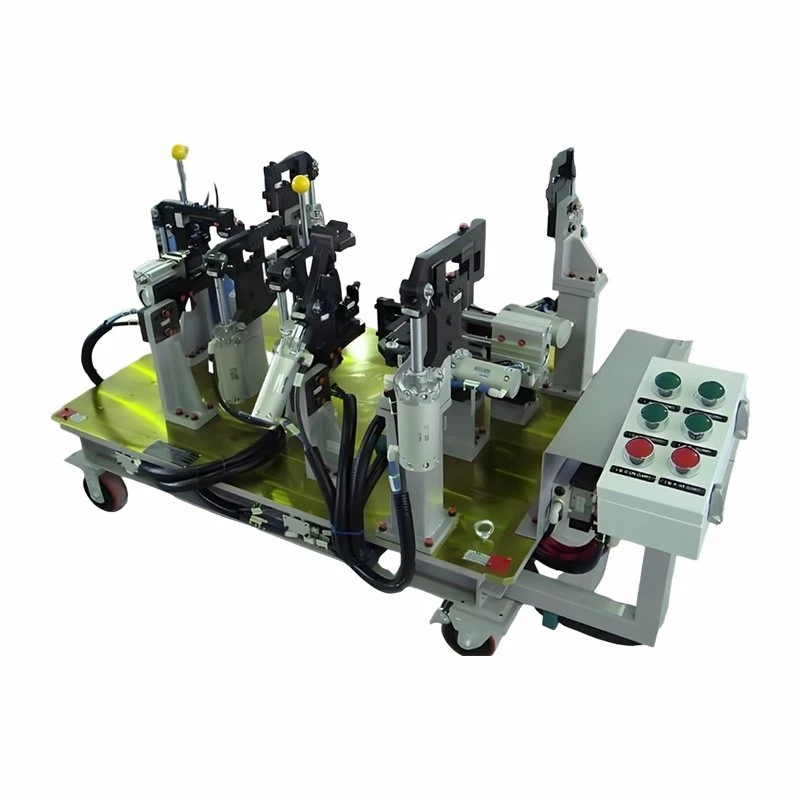

Imagine you're making Automotive Parts Fixtures. If the stamping die isn't hard enough, the fixtures might not align correctly, which could affect the overall performance of the vehicle. It's like building a house with faulty bricks; the whole structure is at risk.
On the other hand, if a die is too hard, it becomes brittle. This brittleness means that the die can crack or break under the pressure of the stamping process. A cracked die is not only useless but can also cause damage to the stamping equipment and pose a safety hazard to the operators.
So, finding the right balance of die hardness is crucial. It's like Goldilocks searching for the perfect porridge - not too hard, not too soft, but just right.
Let's talk about the factors that affect die hardness. One of the main factors is the material used to make the die. Different metals and alloys have different inherent hardness levels. For example, high - speed steel is known for its relatively high hardness and good wear resistance. Tool steel is also a popular choice for stamping dies because it can be heat - treated to achieve the desired hardness.
Heat treatment is another key factor. By heating and cooling the die material in a controlled way, we can adjust its hardness. For instance, quenching (rapid cooling) and tempering (reheating at a lower temperature) processes are commonly used to increase the hardness of the die while also reducing its brittleness.
The manufacturing process itself also plays a role. Precision machining and the quality of the surface finish can impact the die's hardness and performance. A well - machined die with a smooth surface finish is less likely to have stress concentrations that could lead to premature wear or cracking.
Now, let's look at how die hardness directly impacts the quality of metal stamped parts. When a die has the right hardness, the stamped parts are more likely to have:
- Accurate Dimensions: The die maintains its shape over multiple stamping cycles, ensuring that each part is made to the exact specifications. This is particularly important for Automotive Parts Inspection Fixtures, where any deviation can lead to false inspection results.
- Good Surface Finish: A hard die is less likely to be scratched or damaged during the stamping process, which means the surface of the stamped parts will be smoother. This is essential in industries where aesthetics and performance are both important, like consumer electronics or high - end automotive components.
- Longer Die Life: A die with the appropriate hardness will last longer, reducing the frequency of die replacements. This not only saves money on die manufacturing costs but also minimizes downtime in the production process.
As a Metal Stamping Dies supplier, we understand the significance of die hardness in delivering high - quality stamped parts. That's why we use the best materials and state - of - the - art manufacturing processes to ensure our dies have the optimal hardness for each specific application.
Whether you're in the automotive, aerospace, or any other industry that relies on metal stamping, you need a reliable supplier who can provide dies that meet your exact requirements. If you're looking for top - notch Metal Stamping Dies, we're here to help.
We've got a team of experts who can work with you to determine the best die hardness for your project. We'll take into account factors such as the type of metal being stamped, the complexity of the part design, and the production volume.
So, if you're interested in getting in touch to discuss your metal stamping die needs, feel free to reach out. We're always ready to have a chat and find the perfect solution for you.
In conclusion, die hardness is a critical factor that directly affects the quality of metal stamping. By finding the right balance, we can ensure that the stamped parts are of high quality, have accurate dimensions, and are cost - effective to produce. If you want to take your metal stamping process to the next level, don't hesitate to contact us. Let's work together to make your metal stamping projects a success!
References
- "Metalworking: Principles and Applications" by Albert B. Chapman
- "Tool and Manufacturing Engineers Handbook"


