


Hey there! As a chassis shell supplier, I've been getting a lot of questions lately about the role of a chassis shell in electrostatic discharge (ESD) protection. So, I thought I'd sit down and write a blog post to share some insights on this topic.
First off, let's talk about what electrostatic discharge is. ESD is basically the sudden flow of electricity between two electrically charged objects caused by contact, an electrical short, or dielectric breakdown. In simpler terms, it's that little zap you feel when you touch a doorknob after walking across a carpet. While a small ESD event might just give you a minor shock, in the world of electronics, it can be a real nightmare.
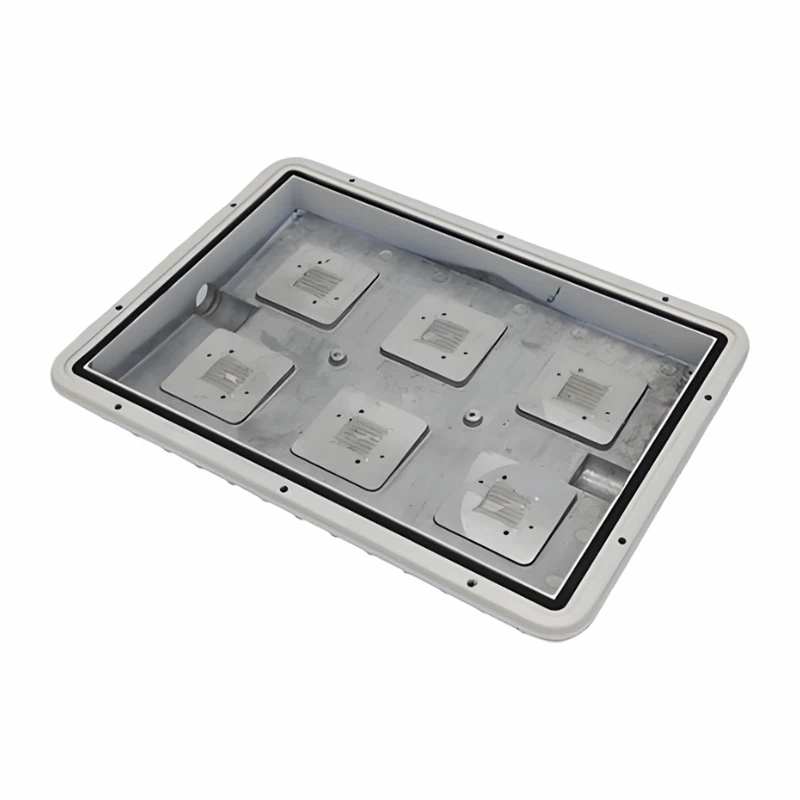
ESD can cause all sorts of problems for electronic devices. It can damage sensitive components, lead to malfunctions, and even reduce the lifespan of the device. That's where the chassis shell comes in. A chassis shell acts as a protective barrier for the electronic components inside a device, and it plays a crucial role in ESD protection.
One of the main ways a chassis shell helps with ESD protection is by providing a conductive path for the static electricity to flow. When an ESD event occurs, the chassis shell can absorb the electrical charge and direct it safely to the ground. This prevents the charge from building up and potentially causing damage to the internal components.
To understand this better, let's think of the chassis shell as a lightning rod for your electronic device. Just like a lightning rod on a building, the chassis shell attracts the electrical charge and channels it away from the sensitive parts of the device. This is especially important in environments where there is a high risk of ESD, such as manufacturing facilities or data centers.
Another important aspect of ESD protection is the grounding of the chassis shell. A properly grounded chassis shell ensures that any static electricity that is absorbed is quickly and safely dissipated. This is typically achieved by connecting the chassis shell to a grounding point, such as the earth or a dedicated grounding system.
In addition to providing a conductive path and grounding, the design of the chassis shell also plays a role in ESD protection. For example, a well-designed chassis shell will have smooth surfaces and rounded edges to minimize the risk of sharp points where static electricity can accumulate. It will also have proper ventilation to prevent the build-up of static charge due to friction.
Now, let's talk about some of the specific components that can enhance the ESD protection capabilities of a chassis shell. One such component is Chassis Rivets. These rivets are used to secure the various parts of the chassis shell together, and they can also help to improve the electrical conductivity of the shell. By ensuring a good electrical connection between the different parts of the chassis, the rivets help to create a more effective conductive path for the static electricity.
Another important component is Chassis Crossbeams. These crossbeams provide structural support to the chassis shell, but they can also play a role in ESD protection. By acting as additional conductive paths, the crossbeams can help to distribute the static charge more evenly across the chassis shell, reducing the risk of localized charge build-up.
Finally, Cover Plate Dispensing is another process that can enhance ESD protection. This process involves applying a special coating or material to the cover plate of the chassis shell, which can help to reduce the generation of static electricity and improve the overall ESD performance of the device.
As a chassis shell supplier, we understand the importance of ESD protection in today's electronic devices. That's why we offer a wide range of chassis shells that are designed to meet the highest standards of ESD protection. Our chassis shells are made from high-quality materials and are carefully engineered to provide optimal performance in a variety of applications.
If you're in the market for a chassis shell that offers excellent ESD protection, we'd love to hear from you. Whether you're a manufacturer looking for a reliable supplier or an engineer in need of a custom solution, we have the expertise and experience to meet your needs. Contact us today to start a conversation about your ESD protection requirements and how our chassis shells can help.
In conclusion, the role of a chassis shell in electrostatic discharge protection is crucial. By providing a conductive path, grounding, and a well-designed structure, the chassis shell helps to protect electronic devices from the damaging effects of ESD. With the right components and design, a chassis shell can significantly improve the reliability and performance of electronic devices in a variety of environments. So, if you're looking for a way to enhance the ESD protection of your electronic devices, consider investing in a high-quality chassis shell from a trusted supplier.
References

- Electrostatic Discharge Association (ESDA) standards and guidelines.
- Various research papers on electrostatic discharge protection in electronic devices.


