


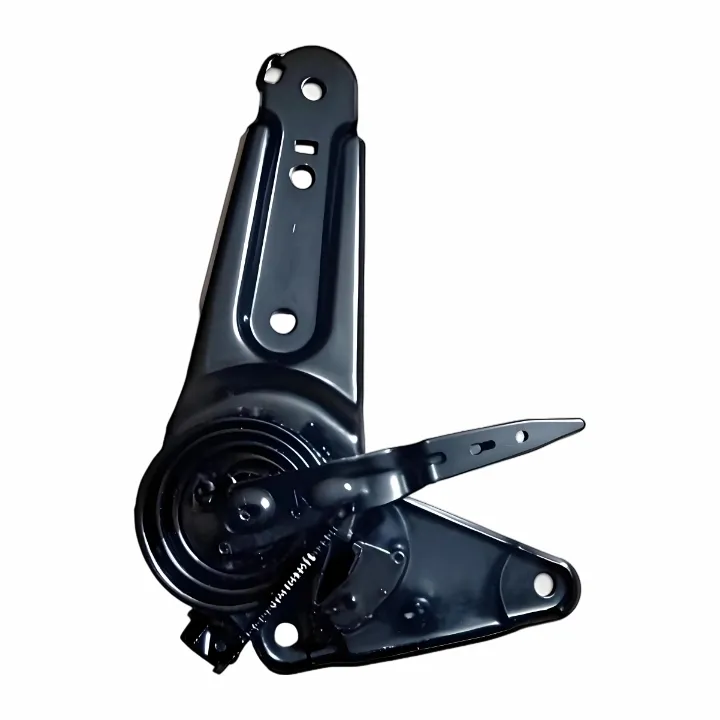
In the automotive industry, the seat angle adjuster is a crucial component that significantly enhances the comfort and functionality of car seats. As a leading supplier of seat angle adjusters, I am often asked about the materials used in their production. Understanding these materials is essential for both automotive manufacturers and consumers, as it directly impacts the performance, durability, and safety of the seat angle adjuster.
Metals: The Foundation of Seat Angle Adjusters
Metals are the primary materials used in seat angle adjusters due to their strength, durability, and ability to withstand high loads. The most commonly used metals include steel and aluminum.
Steel
Steel is a popular choice for seat angle adjusters because of its high strength and excellent formability. It can be easily shaped into complex geometries, which is essential for the precise operation of the adjuster. There are different types of steel used, such as carbon steel and alloy steel.
Carbon steel is known for its affordability and good mechanical properties. It provides sufficient strength for most seat angle adjuster applications. However, it may be prone to corrosion, so it often requires surface treatments like galvanization or painting to enhance its rust resistance.
Alloy steel, on the other hand, contains additional elements such as chromium, nickel, and molybdenum, which improve its strength, hardness, and corrosion resistance. Alloy steel is often used in high - performance seat angle adjusters that need to withstand more demanding conditions. For example, in luxury cars or sports vehicles where the seats may be adjusted more frequently and experience higher stress levels.
Aluminum
Aluminum is another important metal used in seat angle adjusters. It is lightweight, which is a significant advantage in the automotive industry as it helps to reduce the overall weight of the vehicle, improving fuel efficiency. Aluminum also has good corrosion resistance, which makes it suitable for long - term use in various environments.

However, aluminum is not as strong as steel. To compensate for its lower strength, aluminum alloys are often used. These alloys contain elements like copper, magnesium, and zinc, which enhance their mechanical properties. Aluminum alloys can be heat - treated to further increase their strength, making them a viable option for seat angle adjusters that require a balance between weight and strength.
Plastics: Enhancing Functionality and Comfort
Plastics play an important role in seat angle adjusters, mainly for non - load - bearing components. They offer several advantages, including low cost, ease of manufacturing, and the ability to provide a smooth and quiet operation.
Polypropylene (PP)
Polypropylene is a widely used plastic in the automotive industry. It is lightweight, chemical - resistant, and has good impact strength. In seat angle adjusters, polypropylene is often used for components such as covers, handles, and some internal parts. Its low cost makes it an attractive option for mass - produced seat angle adjusters.
Acrylonitrile Butadiene Styrene (ABS)
ABS is a tough and rigid plastic that combines the properties of acrylonitrile, butadiene, and styrene. It has good dimensional stability, which means it maintains its shape under different temperatures and environmental conditions. ABS is commonly used for parts that require a high level of precision and durability, such as gear housings and some control knobs in seat angle adjusters.
Rubber and Elastomers: Ensuring Smooth Operation and Noise Reduction
Rubber and elastomers are used in seat angle adjusters to provide cushioning, dampening, and sealing functions. They help to reduce noise, vibration, and harshness (NVH) levels, which is crucial for a comfortable driving experience.
Natural Rubber
Natural rubber has excellent elasticity and resilience. It can absorb shock and vibration effectively, making it suitable for use in gaskets and seals in seat angle adjusters. Natural rubber also has good adhesion properties, which helps to ensure a tight seal between different components, preventing the ingress of dust and moisture.
Synthetic Elastomers
Synthetic elastomers, such as nitrile rubber (NBR) and silicone rubber, are also commonly used. Nitrile rubber has good oil and fuel resistance, which makes it suitable for applications where the seat angle adjuster may come into contact with lubricants or other automotive fluids. Silicone rubber, on the other hand, has excellent heat resistance and weatherability, making it ideal for use in components that are exposed to high temperatures or harsh environmental conditions.
Composite Materials: Combining the Best of Both Worlds
Composite materials are becoming increasingly popular in the automotive industry, and seat angle adjusters are no exception. Composite materials are made by combining two or more different materials to create a new material with improved properties.
Fiberglass - Reinforced Plastics (FRP)
Fiberglass - reinforced plastics consist of a plastic matrix (usually polyester or epoxy) reinforced with glass fibers. FRP offers a high strength - to - weight ratio, good corrosion resistance, and excellent fatigue resistance. In seat angle adjusters, FRP can be used for components that require high strength and stiffness, such as some structural parts.
Carbon Fiber - Reinforced Plastics (CFRP)
Carbon fiber - reinforced plastics are even stronger and lighter than FRP. They are made by embedding carbon fibers in a polymer matrix. CFRP has extremely high strength and stiffness, making it suitable for high - performance seat angle adjusters. However, CFRP is more expensive than FRP, so it is typically used in premium or specialized automotive applications.
The Importance of Material Selection
The selection of materials for seat angle adjusters is a critical process that involves considering multiple factors. Automotive manufacturers and suppliers need to balance the requirements of strength, durability, weight, cost, and performance.
For example, in a budget - friendly car, the seat angle adjuster may be made primarily of carbon steel and polypropylene to keep the cost down while still providing a reasonable level of performance. In a high - end luxury vehicle, on the other hand, the seat angle adjuster may incorporate alloy steel, aluminum alloys, and CFRP to ensure maximum strength, light weight, and smooth operation.
As a seat angle adjuster supplier, we understand the importance of using the right materials. We work closely with our customers to understand their specific requirements and provide them with seat angle adjusters that meet or exceed their expectations. Our products are designed and manufactured using the latest materials and technologies to ensure high quality and reliability.
Related Products
If you are interested in other car seat accessories related to seat angle adjusters, we also offer a wide range of products. You can check out our Seat Stampings, which are essential for the structural integrity of car seats. Our Seat Angle Adjuster products are designed to provide smooth and precise adjustment. And for the connection and support of seat components, our Seat Pipe Fittings are a great choice.
Contact Us for Procurement
If you are an automotive manufacturer or distributor looking for high - quality seat angle adjusters, we would love to hear from you. Our team of experts is ready to assist you in finding the right solutions for your needs. Whether you need a standard seat angle adjuster or a customized one, we have the capabilities to meet your requirements. Contact us today to start a procurement discussion and take your car seat comfort to the next level.
References
- Automotive Materials Handbook, Society of Automotive Engineers (SAE)
- Plastics in Automotive Applications, Hanser Publications
- Rubber and Elastomers in the Automotive Industry, Elsevier


