


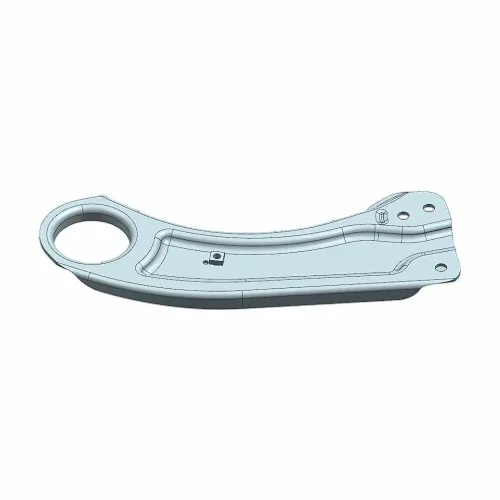
The car engine bracket, an often overlooked yet crucial component in automotive engineering, plays a multifaceted role in ensuring the optimal performance, safety, and longevity of a vehicle. As a dedicated supplier of car engine brackets, I have witnessed firsthand the significance of these parts in the automotive ecosystem. In this blog, I will delve into the various functions of a car engine bracket and highlight why choosing the right bracket is essential for both vehicle manufacturers and end - users.
1. Engine Support and Mounting
The primary function of a car engine bracket is to support the engine and securely mount it within the vehicle's chassis. The engine is a heavy and powerful component that generates significant vibrations and forces during operation. The engine bracket acts as an interface between the engine and the chassis, transferring the weight of the engine and its associated components to the vehicle's frame.
By providing a stable mounting point, the engine bracket helps to prevent excessive movement of the engine. This is crucial because uncontrolled engine movement can lead to a variety of problems, such as damage to engine components, misalignment of drivetrain parts, and even interference with other vehicle systems. A well - designed engine bracket ensures that the engine remains in the correct position, allowing for smooth power transfer and efficient operation.
2. Vibration Damping
Engines produce vibrations as a result of the reciprocating motion of pistons, the rotation of the crankshaft, and the combustion process. These vibrations can be transmitted throughout the vehicle, causing discomfort for passengers and potentially leading to premature wear and tear of components. Car engine brackets are designed to dampen these vibrations and reduce their impact on the vehicle.
Many engine brackets incorporate rubber or elastomeric isolators. These isolators act as shock absorbers, absorbing and dissipating the energy generated by engine vibrations. By reducing the transmission of vibrations to the chassis, the engine bracket helps to improve the overall ride quality of the vehicle. It also protects sensitive electronic components and other parts from the harmful effects of excessive vibrations, thereby increasing their lifespan.

3. Load Distribution
In addition to supporting the weight of the engine, the car engine bracket is responsible for distributing the loads generated by the engine evenly across the chassis. The engine generates forces not only in the vertical direction but also in the horizontal and lateral directions during acceleration, deceleration, and cornering.
A properly designed engine bracket ensures that these forces are spread out over a larger area of the chassis. This helps to prevent concentrated stress points, which can lead to structural damage or failure of the chassis. By distributing the loads effectively, the engine bracket contributes to the overall structural integrity of the vehicle, making it safer and more reliable.
4. Alignment and Compatibility
Engine brackets are engineered to ensure proper alignment of the engine with other drivetrain components, such as the transmission and the driveshaft. Correct alignment is essential for efficient power transfer and smooth operation of the vehicle. A misaligned engine can cause excessive wear on drivetrain parts, reduced fuel efficiency, and even drivability issues.
As a car engine bracket supplier, we understand the importance of compatibility. Different vehicle models have different engine configurations and chassis designs, which require specific engine brackets. Our brackets are designed to fit precisely with the engine and the chassis of each vehicle model, ensuring seamless integration and optimal performance.
5. Protection of Surrounding Components
The engine bracket also serves as a protective barrier for surrounding components. It helps to prevent the engine from coming into contact with other parts of the vehicle, such as the radiator, wiring harnesses, and coolant hoses. In the event of an engine movement or vibration, the bracket can absorb the impact and prevent damage to these sensitive components.
Related Products
In addition to car engine brackets, we also offer a range of related products that are essential for the proper functioning of the vehicle's chassis. For example, Damper Brackets are used to mount shock absorbers and dampers, which play a crucial role in controlling the movement of the vehicle's suspension. Crossbeam Reinforcements are designed to strengthen the vehicle's crossbeams, improving the overall structural rigidity of the chassis. And Swing Arm Brackets are used to support the swing arms of the suspension system, ensuring smooth and stable handling.
Why Choose Our Car Engine Brackets
As a leading supplier of car engine brackets, we are committed to providing high - quality products that meet the strictest industry standards. Our brackets are manufactured using advanced materials and state - of - the - art manufacturing processes. We conduct rigorous quality control tests to ensure that each bracket meets our customers' expectations in terms of performance, durability, and reliability.
We also offer customized solutions to meet the specific needs of our customers. Whether you are a vehicle manufacturer looking for a unique engine bracket design or an aftermarket customer in need of a replacement bracket, our team of experts can work with you to develop the perfect solution.
Contact Us for Purchase and Negotiation
If you are in the market for high - quality car engine brackets or any of our related products, we invite you to contact us for a purchase and negotiation. Our sales team is ready to assist you with any questions you may have and to provide you with a competitive quote. We look forward to the opportunity to work with you and to contribute to the success of your automotive projects.
References
- Automotive Engineering Handbook, Society of Automotive Engineers (SAE)
- Fundamentals of Vehicle Dynamics, Thomas D. Gillespie
- Chassis Design: Principles and Analysis, Christopher H. Crolla


